How Much Down Payment for Land Is Typically Required?
The down payment for land generally ranges from 10% to 25% of the purchase price, depending on various factors like loan type, lender requirements, credit score, and the land’s intended use. Land loans often require higher down payments than traditional home mortgages because lenders perceive more risk with raw land.
Understanding how much down payment for land involves helps buyers prepare financially and avoid surprises during the purchase process. Land loans can vary widely: for raw, undeveloped land, lenders typically expect larger upfront payments compared to land with utilities or ready-to-build lots. The borrower’s financial profile and the lender’s policies also play key roles in determining exact amounts.
This article explores the typical down payment expectations when buying land, factors affecting the required down payment, loan options, and tips to reduce upfront costs. With this information, readers can plan land purchases more effectively and know which approaches might lower their initial payments.
Why Does the Down Payment for Land Differ from Home Loans?
Risk Factors in Land Lending
Lenders view land loans as riskier than home mortgages due to the more limited use and resale possibilities of land compared to developed properties. Raw land often lacks infrastructure and immediate income potential, which heightens lender caution and results in higher down payment requirements.
This risk assessment causes many banks to ask for 20% to 25% down payments—or even more—on raw land purchases. The higher upfront payment reduces the lender’s exposure if the borrower defaults.
Differences Between Raw and Improved Land
Raw land is completely undeveloped, lacking utilities or access roads, which makes it less attractive for lenders. Improved land—meaning it has utilities, access roads, or zoning approvals—usually commands lower down payment requirements due to its increased marketability.
Buyers may find lenders willing to accept 10% to 15% down on improved land. Understanding the development level affects financing options and upfront costs significantly.
- Raw land often needs 20-25% down
- Improved land may require 10-15% down
- Infrastructure influences loan terms
Loan Types Affecting Land Down Payments
Traditional Bank Land Loans
Banks typically require 20% to 25% down payments for land loans. These loans can have stricter credit and income requirements than residential mortgages. Borrowers with higher credit scores and stable income often get better rates but still must meet the substantial down payment threshold.
Advantages of bank loans include potentially lower interest rates compared to other financing methods, but the necessity of a sizable down payment can limit affordability for some buyers.
Seller Financing and Alternative Options
Seller financing may enable buyers to negotiate lower down payments, sometimes as low as 5% to 10%. Private lenders or land loan specialists can offer more flexible terms but often charge higher interest rates and fees.
Alternative financing options might be useful for buyers who cannot muster typical down payments but come with trade-offs such as higher total costs or shorter repayment periods.
- Seller financing can lower down payment
- Private lenders offer flexibility at higher costs
Factors Influencing the Required Land Down Payment
Credit Score and Financial Profile
Lenders assess a buyer’s credit history, debt-to-income ratio, and income stability when deciding down payment requirements. Better credit profiles usually qualify for lower down payments within the typical ranges.
Poor credit or inconsistent income may prompt lenders to ask for a 25% or higher down payment to mitigate risk.
- Higher credit score = lower down payment
- Income stability influences lender trust
For more on this, see our related guide: Understanding the Average Cost of Flood Insurance: What Homeowners Should Expect.
Land Characteristics and Location
Land that is easier to develop or is in desirable locations may need smaller down payments due to stronger resale value and reduced lender risk. Conversely, remote or environmentally restricted parcels often require larger upfront payments.
Size, zoning, terrain, and market trends can all impact the down payment amount required by the lender.
- Developable land demands less down
- Remote land may require 25%+ down
- Zoning and terrain impact loan terms
How to Calculate a Suitable Down Payment for Your Land Purchase

Estimating Based on Purchase Price and Loan Type
Start by determining the purchase price and the down payment percentage required by your lender or financing source. Multiplying these gives the upfront cash needed.
If unsure about loan terms, researching average land loan down payment requirements in your area can provide ballpark estimates to prepare your budget.
- Purchase price x down payment % = upfront cost
- Research local lender expectations
Considering Additional Costs in Your Budget
Besides down payment, buyers should plan for closing costs, property taxes, surveying fees, and possible development expenses. These extra charges can increase total upfront money needed beyond the land loan down payment.
A comprehensive budget ensures you are financially ready to close the land purchase without surprises.
- Closing costs
- Property assessments
- Survey and legal fees
Ways to Reduce Your Land Down Payment

Improving Your Credit and Financial Standing
Raising your credit score and lowering existing debts can convince lenders to accept smaller down payments. Demonstrating steady income and saving for a substantial upfront amount also improves your negotiating position.
Taking time to build a strong financial profile before applying can save thousands on the down payment and overall loan costs.
- Pay down debts
- Build credit history
- Save consistently
For more on this, see our related guide: How to Finance a Lake Lot: A Practical Guide to Buying Waterfront Property.
Choosing the Right Loan or Seller Financing
Opting for seller financing or loans tailored for land buyers might reduce your initial payment. Some government programs or local incentives also assist with land purchase financing.
Exploring various financing sources helps identify options with manageable down payment terms that align with your budget.
- Seller financing flexible terms
- Check for government land loans or grants
Understanding Land Loan Down Payment Requirements
Typical Down Payment Percentages for Land Loans
Land loan down payment requirements typically fall between 15% and 25%, with raw land at the higher end and improved lots at the lower end. These percentages reflect the lender’s risk evaluation and the buyer’s creditworthiness.
Knowing these common ranges helps align buyer expectations and supports realistic financial planning for a land purchase.
- Raw land: 20-25% down
- Improved land: 10-15% down
For official details on government-supported land loans and eligibility, consult land loan information from the USDA. Land loan information from the USDA.
How Secondary Keyword 'Land Loan Down Payment Requirements' Applies
Understanding land loan down payment requirements involves researching lender policies and local market conditions. Different types of land and financing options directly affect how much a buyer must provide upfront for loan approval.
Experienced buyers often compare these requirements across lenders to find the most affordable option that meets their land purchasing goals.
Down Payment Requirements by Land Loan Type
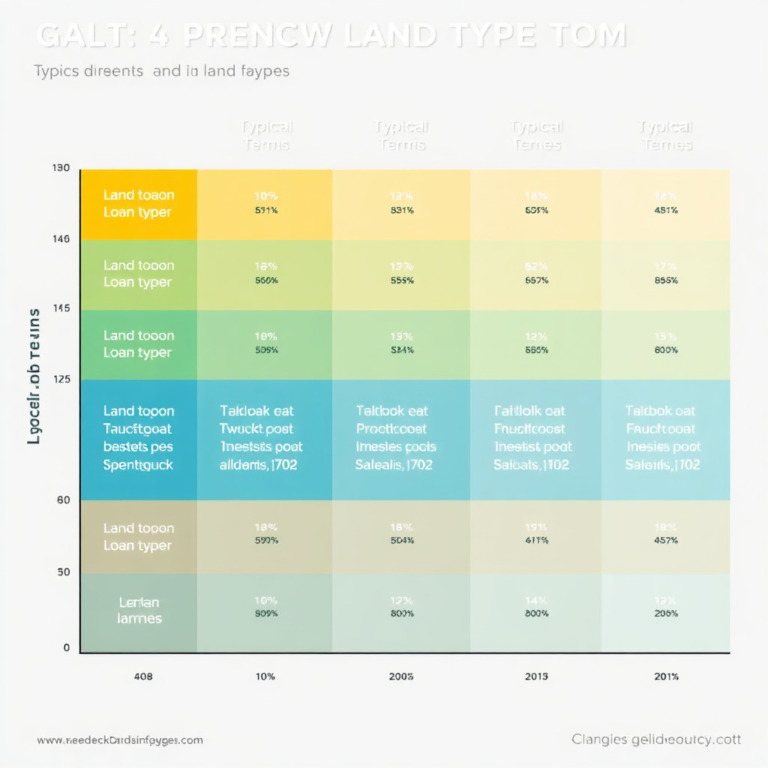
Here's a comparison of typical down payment percentages and conditions for various land loan categories.
| Loan Type | Typical Down Payment | Interest Rates | Qualification Criteria |
|---|---|---|---|
| Raw Land Loan | 20%-25% | Higher (7-12%) | Strong credit, higher income |
| Improved Land Loan | 10%-15% | Moderate (6-10%) | Good credit, moderate income |
| Seller Financing | 5%-15% | Variable, often higher | Negotiable terms |
| Farm Land Loan | 15%-20% | Moderate (5-9%) | Agricultural experience preferred |
| Government Land Loans | 10%-15% | Lower (4-7%) | Eligibility requirements, location-specific |
Frequently Asked Questions
Why is the down payment for land higher than for a home?
Land is riskier for lenders because it lacks immediate income or structures, leading them to require larger down payments to protect against default.
Can I get a land loan with no down payment?
No-down-payment land loans are extremely rare; most lenders require at least 10%-20% down due to the higher risk involved.
Does the land’s location affect the down payment?
Yes, land in desirable or developed areas often requires smaller down payments compared to remote or restricted parcels due to marketability.
How can I reduce my down payment on a land loan?
Improving your credit, choosing seller financing, or selecting improved land instead of raw land can help lower the required down payment.
Are there government programs to help with land down payments?
Some government programs offer land loans or grants with reduced down payment requirements, typically for agricultural or rural land purchases.
Key Takeaways
- Down payments for land typically range from 10% to 25%, higher than standard home mortgages.
- Raw land requires larger down payments than improved parcels with utilities.
- Your credit score, land type, and loan choice greatly influence down payment amounts.
- Exploring seller financing and government programs can help reduce upfront cash needs.
Conclusion
Determining how much down payment for land you need depends on multiple factors including the land’s condition, your financial profile, and lender policies. Because land loans come with more risk than traditional mortgages, expect to prepare a larger upfront payment—usually between 10% and 25% of the purchase price. Proper planning and understanding the various loan types helps you find the right financing fit and avoid surprises when making an offer.
For buyers aiming for minimal initial cash outlay, improving your credit score and considering improved land parcels rather than raw land can lower down payment demands. Alternatively, seller financing or specialized land loan programs may offer flexible terms and reduced upfront costs if you qualify. Each path has trade-offs in terms, cost, and approval likelihood, so weigh these carefully based on your purchase goals and financial capability.
Once you know the typical down payment range and your eligibility, the next best step is to get pre-approved by multiple lenders or consult specialized land loan brokers. Comparing options will clarify your budget and help you negotiate favorable terms. This preparation sets you up for a smoother land acquisition experience with confidence in your financial readiness.



One Comment